×
- Hello
- Login or Register
- Quick Links
- Live Chat
- Track Order
- Parts Availability
- RMA
- Help Center
- Contact Us
- Shop for
- Mercedes-Benz Parts

My Garage
My Account
Cart
Genuine Mercedes-Benz C240 Driveshaft
Drive Shaft- Select Vehicle by Model
- Select Vehicle by VIN
Select Vehicle by Model
orMake
Model
Year
Select Vehicle by VIN
For the most accurate results, select vehicle by your VIN (Vehicle Identification Number).
6 Driveshafts found

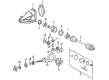
Mercedes-Benz C240 Rear Shaft Part Number: 203-410-19-02
$328.42 MSRP: $458.00You Save: $129.58 (29%)Ships in 1-2 Business DaysMercedes-Benz C240 Front Shaft Part Number: 203-410-19-01
$387.14 MSRP: $540.00You Save: $152.86 (29%)Ships in 1-2 Business DaysMercedes-Benz C240 Drive Shaft Assembly Part Number: 203-410-56-06
$350.40 MSRP: $488.00You Save: $137.60 (29%)Ships in 1-2 Business Days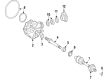
Mercedes-Benz C240 Drive Shaft Part Number: 203-410-61-06
$790.80 MSRP: $1100.00You Save: $309.20 (29%)Ships in 1-2 Business DaysMercedes-Benz C240 Drive Shaft Assembly Part Number: 203-410-76-06
$960.00 MSRP: $1340.00You Save: $380.00 (29%)Ships in 1-2 Business DaysMercedes-Benz C240 Drive Shaft Assembly Part Number: 203-410-10-16
$1039.20 MSRP: $1450.00You Save: $410.80 (29%)Ships in 1-2 Business Days
Mercedes-Benz C240 Driveshaft
Every OEM part goes through strict quality checks. The checks keep you safe and make Driveshaft tough. They keep performance the same as your original parts. If your Mercedes-Benz C240 needs OEM parts, visit our catalog. You will find extensive genuine Mercedes-Benz C240 parts. We offer a wide selection at competitive prices, and with clear fit details and simple guidance, choosing what you need is effortless. Each of our parts has a manufacturer's warranty. You will like our simple return policy. We pack and ship fast, and you get your order quickly. Shopping here feels easy and enjoyable.
Mercedes-Benz C240 Driveshaft Parts and Q&A
- Q: What is the construction and attachment method of the driveshaft on Mercedes-Benz C240?A:The driveshaft features a tubular construction and can be either a one or two-section type. On AWD models, the front driveshaft is bolted to a flange at the front axle pinion and the transfer case. The rear driveshaft connects to the transmission or transfer case and the rear axle pinion flange through bolted flanges. Near its forward end, the shaft is supported on a ball bearing that is flexibly mounted in a bracket.
- Q: How to remove and install the rear and front driveshafts on Mercedes-Benz C240?A:The manufacturer recommends replacing driveshaft fasteners with new ones during installation. For the rear driveshaft, begin by raising the vehicle and securely supporting it on jackstands. Remove the rear portion of the exhaust system and the exhaust heat shield. Use chalk or a scribe to index the driveshaft's relationship to the differential axle assembly mating flange for correct alignment upon reinstallation. Remove the bolts securing the driveshaft flange to the differential pinion flange, turning the driveshaft or wheels as necessary for accessibility, then separate the driveshaft from the differential pinion flange. If equipped, remove the rear engine crossmember. Mark the center support bearing's relationship to the support bracket, loosen the bolts securing the center support bearing without removing them, and mark the driveshaft's relationship to the transmission companion flange before removing the corresponding bolts. Remove the fasteners securing the center support bearing and lower the driveshaft. Inspect the center support bearing; if it is rough or noisy, replace it. Connect the front end of the driveshaft assembly to the transmission extension housing, raise the center support bearing and bolt it loosely into place, then raise the rear end of the rear shaft, ensuring the alignment marks match. Tighten the fasteners and center support bearing bolts to the specified torque, completing the installation in reverse order of removal. For the front driveshaft on AWD models, remove the right side intake air duct and the fasteners securing the upper portion of the exhaust shielding plate. Raise the vehicle and support it securely on jackstands, then remove the lower engine cover(s) and the right side downstream oxygen sensor, unclipping the wiring harness from its retaining clips. Remove the fasteners securing the lower portion of the exhaust shielding plate and then the shield. Use chalk or a scribe to mark the driveshaft's relationship to the differential axle assembly mating flange. Remove the bolts securing the front end of the driveshaft to the differential mating flange, make alignment marks on the driveshaft and transfer case flanges, unbolt the flange securing the driveshaft universal joint to the transfer, and then remove the driveshaft. Installation is the reverse of removal; if alignment issues arise due to component rotation, place the vehicle in Neutral or rotate one wheel to achieve the original alignment, ensuring the universal joint caps are properly positioned in the flange seal before tightening the fasteners to the specified torque.
Related Mercedes-Benz C240 Parts
 Mercedes-Benz C240 Radiator
 Mercedes-Benz C240 A/C Condenser
 Mercedes-Benz C240 Back Up Light
 Mercedes-Benz C240 Control Arm Bolt
 Mercedes-Benz C240 CV Joint Boot
 Mercedes-Benz C240 Cylinder Head
 Mercedes-Benz C240 Door Moldings
 Mercedes-Benz C240 Exhaust Manifold
 Mercedes-Benz C240 Piston
 Mercedes-Benz C240 Strut Bearing