×
- Hello
- Login or Register
- Quick Links
- Live Chat
- Track Order
- Parts Availability
- RMA
- Help Center
- Contact Us
- Shop for
- Mercedes-Benz Parts

My Garage
My Account
Cart
Genuine Mercedes-Benz 190E Rod Bearing
Engine Connecting Rod Bearing- Select Vehicle by Model
- Select Vehicle by VIN
Select Vehicle by Model
orMake
Model
Year
Select Vehicle by VIN
For the most accurate results, select vehicle by your VIN (Vehicle Identification Number).
1 Rod Bearing found

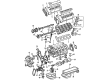
Mercedes-Benz 190E Connecting Rod Bearing Part Number: 111-038-09-10
$6.27 MSRP: $8.50You Save: $2.23 (27%)
Mercedes-Benz 190E Rod Bearing
Every OEM part goes through strict quality checks. The checks keep you safe and make Rod Bearing tough. They keep performance the same as your original parts. If your Mercedes-Benz 190E needs OEM parts, visit our catalog. You will find extensive genuine Mercedes-Benz 190E parts. We offer a wide selection at competitive prices, and with clear fit details and simple guidance, choosing what you need is effortless. Each of our parts has a manufacturer's warranty. You will like our simple return policy. We pack and ship fast, and you get your order quickly. Shopping here feels easy and enjoyable.
Mercedes-Benz 190E Rod Bearing Parts and Q&A
- Q:What are the key considerations regarding Rod Bearing during engine overhaul on Mercedes-Benz 190E?A:Although main and big-end bearings are to be changed during engine overhaul, the old bearings could be retained to be subjected to in-service analysis and bearing shell grading measured by the thickness assigned a colour code. Failure may occur due to not being oiled, presence of dirt or foreign objects, overloading of the engine, or due to corrosion and it is likely to arise again unless the root cause is remedied prior to re-assembly. When inspecting bearing shells they must be taken out of place and be spread on a clean surface so that they can be compared with the relevant crankshaft journal without being in touch with the bearing surface to eliminate skratches. During assembly, filters, or machining may allow dirt into the engine or results in bits of the foreign material incorporated into the bearing material, which can be scored or gouged; complete cleaning and frequent swapping of the oil is important to prevent foreign objects. Possible causes of lack of lubrication include, high heat, overloading, oil leakage, obstructed oil passages, resulting to bearing destruction and overheating. Limited driving habits including full throttle low-speed running can also adversely affect wearing life as they produce very high loads that squeeze out oil and can result in fatigue breakdowns. There is short-haul driving that leads to corrosion by the fact that there is not enough heat to evaporate condensed water and corrosive gases, thus creating acid and sludge that destroys bearing material. Through improper installation during the assembly process, not only it may cause oil starvation and breaking due to tight-fitting bearings or stuck-up dirt. You should also take care not to touch the bearing surface during reassembly lest you create a scratch or contaminate it with dirt. To prevent false economy, it is recommended that bearing shells should be replenished when the engine is being overhauled. Although manufacturers do not suggest that the main bearing cap bolts be inspected, tightening up with new bolts is precautionary on the part of the owner. In the case of big-end bearing cap bolts, it is desirable to make measurements to know whether they need to be renewed, and their renewal is highly encouraged when reassembling them. Bolts can be pressed/tapped out of connecting rods and with 4-cylinder petrol engines; diameter of the narrowest section must be checked; under minimum specified diameter must be renewed. With other engines, the distance along the shank between the bottom of the head and the end should also be measured and must not be more than the maximum allowed.
Related Mercedes-Benz 190E Parts
 Mercedes-Benz 190E Crankshaft
 Mercedes-Benz 190E Crankshaft Gear
 Mercedes-Benz 190E Crankshaft Pulley
 Mercedes-Benz 190E Crankshaft Seal
 Mercedes-Benz 190E Crankshaft Timing Gear
 Mercedes-Benz 190E Cylinder Head
 Mercedes-Benz 190E Engine Cover
 Mercedes-Benz 190E Oil Pan
 Mercedes-Benz 190E Piston Ring Set
 Mercedes-Benz 190E Timing Chain
 Mercedes-Benz 190E Timing Cover
 Mercedes-Benz 190E Valve Guide
Browse by Year
1993 Rod Bearing
1992 Rod Bearing
1991 Rod Bearing
1990 Rod Bearing 1989 Rod Bearing 1988 Rod Bearing 1987 Rod Bearing