×
- Hello
- Login or Register
- Quick Links
- Live Chat
- Track Order
- Parts Availability
- RMA
- Help Center
- Contact Us
- Shop for
- Mercedes-Benz Parts

My Garage
My Account
Cart
Genuine Mercedes-Benz C230 Starter
Starter Ignition- Select Vehicle by Model
- Select Vehicle by VIN
Select Vehicle by Model
orMake
Model
Year
Select Vehicle by VIN
For the most accurate results, select vehicle by your VIN (Vehicle Identification Number).
4 Starters found
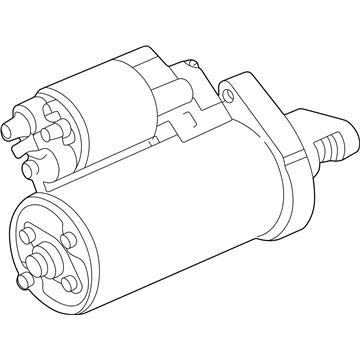
Mercedes-Benz C230 Starter Part Number: 006-151-05-01-80
$293.66 MSRP: $407.00You Save: $113.34 (28%)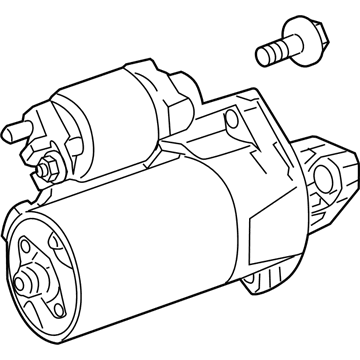
Mercedes-Benz C230 REMAN STARTER Part Number: 005-151-39-01-80-GZ64
$263.28 MSRP: $364.00You Save: $100.72 (28%)
Mercedes-Benz C230 Starter Motor Part Number: 005-151-34-01-83
$158.88 MSRP: $218.00You Save: $59.12 (28%)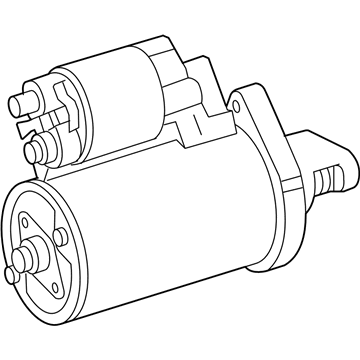
Mercedes-Benz C230 Starter Part Number: 004-151-81-01
Mercedes-Benz C230 Starter
The Mercedes-Benz C230 Starter performs the initial rotation of the engine by using the electricity stored in the battery and transforming it into mechanical motion, and, by relaying the electrical signal to the crankshaft, the car starts with the mere touch of the key or the press of a button. All Mercedes-Benz Starters are powered by an electric motor fed by a fender-mounted solenoid that conducts heavy current directly from the battery, drives an armature enclosed by field coils or permanent magnets, and drives a small gear into the flywheel. On the Mercedes-Benz series, when the electric current enters the engine, the electromagnetic force rotates the armature, the drive gear engages, and the overrunning clutch secures the system by disengaging when the engine fires. The early models operated on a traditional direct-drive layout, with the later generations operating on a light gear-reduction Starter design, multiplying the torque by the use of planetary gears to ensure that a smaller and stronger motor can be applied. All of them have safety circuits, a relay, and either a neutral safety switch or a clutch switch to make sure that the car is not in gear when the sequence starts. In other industries, there are pneumatic cranking systems as well as hydraulic systems; however, the C230 uses only the tested electric type due to its reliability, size, and quick response in diverse climates. If there is voltage and the motor remains silent, the first thing to look at is the solenoid or the control switches before looking at the Starter itself, as these external components frequently break the current flow. The current examples of Mercedes-Benz show decades of perfection that make the unit small, effective, and robust.
Every OEM part goes through strict quality checks. The checks keep you safe and make Starter tough. They keep performance the same as your original parts. If your Mercedes-Benz C230 needs OEM parts, visit our catalog. You will find extensive genuine Mercedes-Benz C230 parts. We offer a wide selection at competitive prices, and with clear fit details and simple guidance, choosing what you need is effortless. Each of our parts has a manufacturer's warranty. You will like our simple return policy. We pack and ship fast, and you get your order quickly. Shopping here feels easy and enjoyable.
Mercedes-Benz C230 Starter Parts and Q&A
- Q:What should you check in the starter circuit if a malfunction occurs on Mercedes-Benz C230?A:When something wrong happens in the starting circuit; do not jump to the conclusion that the starter is on the fritz. First, ensure that battery cable clamps are clean and tight; ensure that battery cables are in good condition replacing any faulty ones. Check the state of the battery, which does not work, change it. Check the wiring connections and starter motor connections and the mounting bolts. Test the starter fuse in the engine com-partment fuse box; see whether it is blown and repair the circuit. Test S terminal on starter motor; verify that V is applied to it by turning ignition key to Start position, test starter relay. Failure of the starter to act on the ignition switch being switched to the start position can be caused by a loss of voltage through the battery to the solenoid control of the starter. To test, connect a test light or voltmeter to 12 volts, and apply it to the solenoid control of the starter. Without voltage, note the fuses and starter relay in daisy chain with the starting system. When the starter motor is not responding to voltage and it appears like it is getting no voltage, take it off the engine and bench test it. A slow turning starter: Check the cranking voltage and current being drawn by the battery, being careful not to exceed 9.6 volts or to exceed 160 amps. The state of the battery, cold-cranking rating, and battery terminal and cable cleanliness are some of the conditions that can affect starter cranking potential. When it is very cold heat the battery or engine block, then test. Failure to activate the starter with on voltage applied to the starter leads to the removal and inspection of the starter motor assembly; a failed solenoid is probable. Prior to this, make an effort to move the crankshaft pulley to eliminate a frozen engine. Test starter assembly on bench control with connect jumper cables with battery voltage on S terminal of solenoid and seeing plunger of solenoid, shifting lever and overrunning clutch. When the pinion drive is long and stationary, then the solenoid is working, but the starter motor is defective. When there is no action and the solenoid clicks, then that proves the next defective component is either the solenoid or the starter motor. When the solenoid plunger acts and turns the pinion drive, the starter assembly is functioning correctly.
- Q:How to remove and install the starter motor on Mercedes-Benz C230?A:In V6 models, the starter motor is on the right lower side of the block. Start by removing the cable on the negative side of a battery. Lift the car and put it on jackstands and take off the engine undercover and the exhaust system. The second step involves removing the nut that fastens the starter wire to the starter terminal on the starter motor solenoid and the second step is to remove the rubber cap that closes the battery cable nut to the B+ terminal. Unhook the battery cable at the B+ connection and take out the two starter motor mounting bolts, bearing in mind that the lower mounting bolt is also holding on a hose clip. Take off the bracket, press the hose aside and remove the starter motor. The opposite of removal is installation, where making sure that the starter motor mounting bolts are tightened to the recommended torque. In four-cylinder types, the starter motor is mounted on the left side of the engine block. Unplug the cable of the negative post of the battery, raise up the vehicle and jack it up with jackstands. Take out the engine undercover, and on 2003-2005 models, take out the two bolts holding the air conditioning hose bracket to the transmission bellhousing and press the hose aside. Disconnect the steering shaft coupler with the steering gear and take away the intake muffler. Detect the electrical connections on the starter motor solenoid and remove the starter motor mounting bolts, and remove the starter. Removal is the opposite of installation.
Related Mercedes-Benz C230 Parts
 Mercedes-Benz C230 Alternator
 Mercedes-Benz C230 Voltage Regulator
 Mercedes-Benz C230 Alternator Bearing
 Mercedes-Benz C230 Alternator Bracket
 Mercedes-Benz C230 Alternator Pulley
 Mercedes-Benz C230 Armature
 Mercedes-Benz C230 Battery Cable
 Mercedes-Benz C230 Battery Vent Tube
 Mercedes-Benz C230 Ground Cables
 Mercedes-Benz C230 Pilot Bearing
 Mercedes-Benz C230 Starter Drive Gear
 Mercedes-Benz C230 Starter Solenoid