×
- Hello
- Login or Register
- Quick Links
- Live Chat
- Track Order
- Parts Availability
- RMA
- Help Center
- Contact Us
- Shop for
- Mercedes-Benz Parts

My Garage
My Account
Cart
Genuine Mercedes-Benz C320 Fuel Pump
Gas Pump- Select Vehicle by Model
- Select Vehicle by VIN
Select Vehicle by Model
orMake
Model
Year
Select Vehicle by VIN
For the most accurate results, select vehicle by your VIN (Vehicle Identification Number).
3 Fuel Pumps found
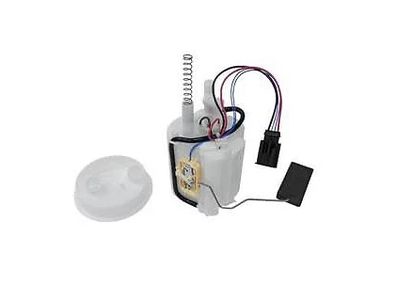

Mercedes-Benz C320 Fuel Pump Part Number: 203-470-10-94
$262.80 MSRP: $366.00You Save: $103.20 (29%)Ships in 1-2 Business Days
Mercedes-Benz C320 Delivery Unit Part Number: 203-470-23-94
Mercedes-Benz C320 Fuel Pump
The Mercedes-Benz C320 Fuel Pump is designed in such a way that it transfers gasoline in the tank to the injection system with the appropriate amount of pressure that the engine needs. The pump in most current Mercedes-Benz models is an electric pump that is placed in the tank with the sending unit and cools itself with fuel and feeds the injectors at approximately 40 to 60 psi. In older Mercedes-Benz vehicles with a carburetor-based engine, the pump was a mechanical diaphragm style, bolted to the engine, having a camshaft eccentric act on a lever to draw in the fuel and force it forward at about 6 psi, sufficient to fill a float bowl but much lower than the requirements of injection. In all years of production of the C320, the transition between mechanical and electric was associated with increased pressure, reduced noise levels, and enhanced emission control. The electric Fuel Pump also switches off in case of a collision when the control unit cuts power to decrease the risk of fire. Performance numbers are given in terms of gallons or liters per hour and the correct device is not difficult to select, as a naturally aspirated engine usually requires half a pound of fuel per horsepower per hour. Regardless of the setup, owners of Mercedes-Benz vehicles can ascertain the necessary rate of flow by multiplying the horsepower of the engine by 0.5 then dividing the result by 6.2 to adjust the gallons per hour output of the pump. In the event that the engine does not start but the Fuel Pump hums, it can be determined in a short time by listening to whether pressure delivery is the culprit and by monitoring relay voltage.
Every OEM part goes through strict quality checks. The checks keep you safe and make Fuel Pump tough. They keep performance the same as your original parts. If your Mercedes-Benz C320 needs OEM parts, visit our catalog. You will find extensive genuine Mercedes-Benz C320 parts. We offer a wide selection at competitive prices, and with clear fit details and simple guidance, choosing what you need is effortless. Each of our parts has a manufacturer's warranty. You will like our simple return policy. We pack and ship fast, and you get your order quickly. Shopping here feels easy and enjoyable.
Mercedes-Benz C320 Fuel Pump Parts and Q&A
- Q:How to remove and install the fuel level sensor module and fuel pump/fuel level sensor module on Mercedes-Benz C320?A:First would be to take out the pressure head of the fuel system and make the cable lose contact with the negative battery. Do not empty fuel now, but do not fill up either: it can be fueled low, though it may need to be disconnected to drain submerged fuel hoses or, if it is full up, use a hose on the fuel filler neck to empty the tank. A hard nylon tube with a 30 degree cut is used to push the check valve open in the fuel filler neck, or to siphon the fuel by removal of the retainer ring in the fuel pump/fuel level sensor module. Then detach the bolts to take out the rear seat cushion and the metal access cover. Unplug the electric connector of the fuel level sensor module, remove the special hose clamps, and part with the fuel supply and its return hose. Clean the space around retainer of fuel level sensor module and unscrew it (with special fuel pump retainer tool) or with large water pump pliers (where the tool is not available) taking care not to damage the retainer. Record the four positions of the module before dismounting on top of the tank by placing a corresponding mark on each top-side locating cover, recording the upward arrow on the locating cover, with the position on the tank. To de-align the float arm, remove the fuel level sensor unit, which is customarily the last item to be installed, lifting the electrical connector and the fuel supply and fuel return hose, and manually rock the unit upward on the floating arm. Install O-ring and new sealing ring on a fuel supply hose elbow, and fit the module, keeping the arrow on the locating cover in line with mark taken earlier. In the case of the fuel pump/fuel level sensor module, which is the hardware in the right compartment of the Fuel Tank, repeat the steps above but facing the opposite side; remove metal access cover, clean the area under the retainer, and with the desired tools, unscrew the retainer. Mark module position, detach locating cover and de-hook electrical connector and fuel line. Disconnect the fuel return hose, then lift the module to remove the hose, which you tilt as needed to keep the float arm out of danger. The opposite of removing is the method of installation.
- Q:What is the preliminary check for the fuel pump and how do you perform a pressure check on Mercedes-Benz C320?A:The fuel pump is contained in the Fuel Tank. To test its operation, with the ignition key in an ON position (not START) listen for low whirring sound which indicates pump working. If the sound is not heard from inside the car, thread off the fuel filler cap and have someone turn the ignition ON while you listen close to the fuel filler. If the pump fails to fire, check the fuel pump fuse and relay in the fuse and relay box on the trunk's left side. If the above components are OK, check the wiring of the fuel pump. If all checks out and pump is running all the time with the ignition in the ON position, then the Powertrain Control Module (PCM) may be defective and should be evaluated by a qualified service department. For fuel pressure test, fuel pressure gauge that can measure high pressure is required and adapter for the Schrader service valve on Fuel Rail. Start by getting the fuel system pressure out. Remove the Schrader valve cap and attach the gauge to fuel rail. Start the engine and check the pressure on the gauge and see if it falls within the specified range. If the pressure is low but below specifications, look for restrictions in the fuel system, such a check the fuel inlet strainer that is located at the base of the fuel pump/fuel level sensor module and cannot be replaced separately. If the pressure is above specifications, then the fuel pressure regulator, an integral part of the Fuel Filter, which is located behind the left chamber of the fuel tank, should be replaced.

Related Mercedes-Benz C320 Parts
 Mercedes-Benz C320 Accelerator Pedal
 Mercedes-Benz C320 Air Duct
 Mercedes-Benz C320 Air Filter
 Mercedes-Benz C320 Air Filter Box
 Mercedes-Benz C320 Air Intake Hose
 Mercedes-Benz C320 Fuel Level Sensor
 Mercedes-Benz C320 Fuel Sending Unit
 Mercedes-Benz C320 Fuel Tank
 Mercedes-Benz C320 Fuel Tank Lock Ring
 Mercedes-Benz C320 Fuel Tank Strap
 Mercedes-Benz C320 Throttle Body
 Mercedes-Benz C320 Throttle Position Sensor
Browse by Year
2005 Fuel Pump 2004 Fuel Pump 2003 Fuel Pump 2002 Fuel Pump 2001 Fuel Pump