×
- Hello
- Login or Register
- Quick Links
- Live Chat
- Track Order
- Parts Availability
- RMA
- Help Center
- Contact Us
- Shop for
- Mercedes-Benz Parts

My Garage
My Account
Cart
Genuine Mercedes-Benz C320 Catalytic Converter
Cat. Converter- Select Vehicle by Model
- Select Vehicle by VIN
Select Vehicle by Model
orMake
Model
Year
Select Vehicle by VIN
For the most accurate results, select vehicle by your VIN (Vehicle Identification Number).
6 Catalytic Converters found
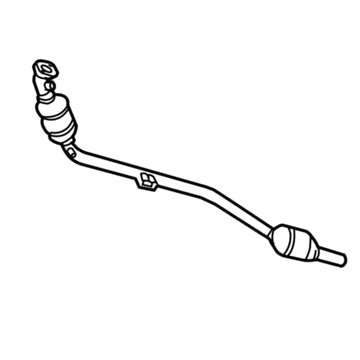
Mercedes-Benz C320 Converter & Pipe Part Number: 203-490-25-20-80
$535.20 MSRP: $745.00You Save: $209.80 (29%)Ships in 1-2 Business Days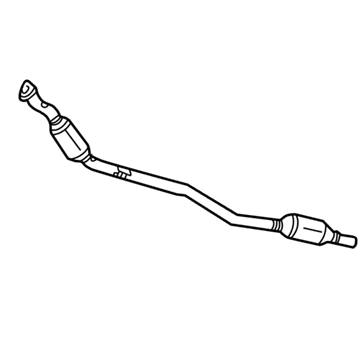
Mercedes-Benz C320 Catalytic Converter Part Number: 203-490-28-20-80
$273.60 MSRP: $380.00You Save: $106.40 (28%)Ships in 1-2 Business Days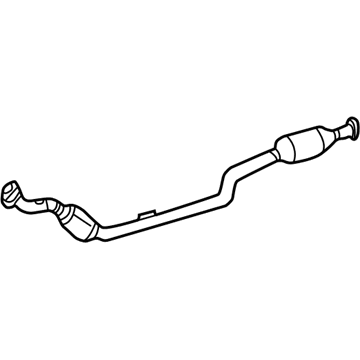
Mercedes-Benz C320 Catalytic Converter Part Number: 203-490-27-20
$272.40 MSRP: $380.00You Save: $107.60 (29%)Ships in 1-2 Business Days
Mercedes-Benz C320 Catalytic Converter Part Number: 203-490-02-20-80
$268.80 MSRP: $374.00You Save: $105.20 (29%)Ships in 1-2 Business DaysMercedes-Benz C320 Exchange Exhaust Pipe Part Number: 203-490-26-20
Mercedes-Benz C320 Catalytic Converter Part Number: 203-490-03-20-80
Mercedes-Benz C320 Catalytic Converter
Every OEM part goes through strict quality checks. The checks keep you safe and make Catalytic Converter tough. They keep performance the same as your original parts. If your Mercedes-Benz C320 needs OEM parts, visit our catalog. You will find extensive genuine Mercedes-Benz C320 parts. We offer a wide selection at competitive prices, and with clear fit details and simple guidance, choosing what you need is effortless. Each of our parts has a manufacturer's warranty. You will like our simple return policy. We pack and ship fast, and you get your order quickly. Shopping here feels easy and enjoyable.
Mercedes-Benz C320 Catalytic Converter Parts and Q&A
- Q:What is the general description and replacement process for a catalytic converter on Mercedes-Benz C320?A:The emission control device of the exhaust system that minimizes some pollutants (hydrocarbons, carbon monoxide and oxides of nitrogen respectively) is called a catalytic converter, and there are two types of catalytic converters namely; oxidation catalyst and reduction catalyst. All three pollutants can be reduced in a so-called Three-Way Catalyst. Two catalysts are fitted to V6 models, one beneath the exhaust manifold flange and another fitted beneath the exhaust manifold; four-cylinder models usually have a single catalyst either near the rear end or directly below the exhaust manifold, and subsequent models have the catalyst built into the exhaust manifold. Should there be an indication of a problem, it is prudent to drop over at a dealer or official emission inspection center to have it diagnosed, because the equipment to perform the test is very costly. It should be checked frequently in terms of leaks, corrosion, and other damage, in case any problem has been identified, converter has to be replaced. A vacuum gauge can be used to monitor intake vacuum at idle and at throttle openings to check the presence of a clogged converter: a big fall in vacuum rate can indicate a restriction. In order to replace it, the vehicle must be lifted up, and replacement oil used which flows through fasteners at the exhaust manifold flange and catalyst flanges. Once the Oxygen Sensor electrical connector has been detached, and the oxygen sensors have been taken out, it is possible to remove the catalytic converter assembly. Only new flange gaskets must be installed, and all fasteners placed with a firm tight fit using anti-seize compound on the threads.
Related Mercedes-Benz C320 Parts
 Mercedes-Benz C320 Canister Purge Valve
 Mercedes-Benz C320 EGR Vacuum Solenoid
 Mercedes-Benz C320 Exhaust Flange Gasket
 Mercedes-Benz C320 Exhaust Hanger
 Mercedes-Benz C320 Exhaust Heat Shield
 Mercedes-Benz C320 Exhaust Manifold
 Mercedes-Benz C320 Exhaust Manifold Gasket
 Mercedes-Benz C320 Exhaust Pipe
 Mercedes-Benz C320 Muffler
 Mercedes-Benz C320 Muffler Strap
 Mercedes-Benz C320 Secondary Air Injection Check Valve
 Mercedes-Benz C320 Shut Off Valve
Browse by Year
2005 Catalytic Converter
2004 Catalytic Converter
2003 Catalytic Converter
2002 Catalytic Converter
2001 Catalytic Converter